Software Modules · Back office
Back office integration
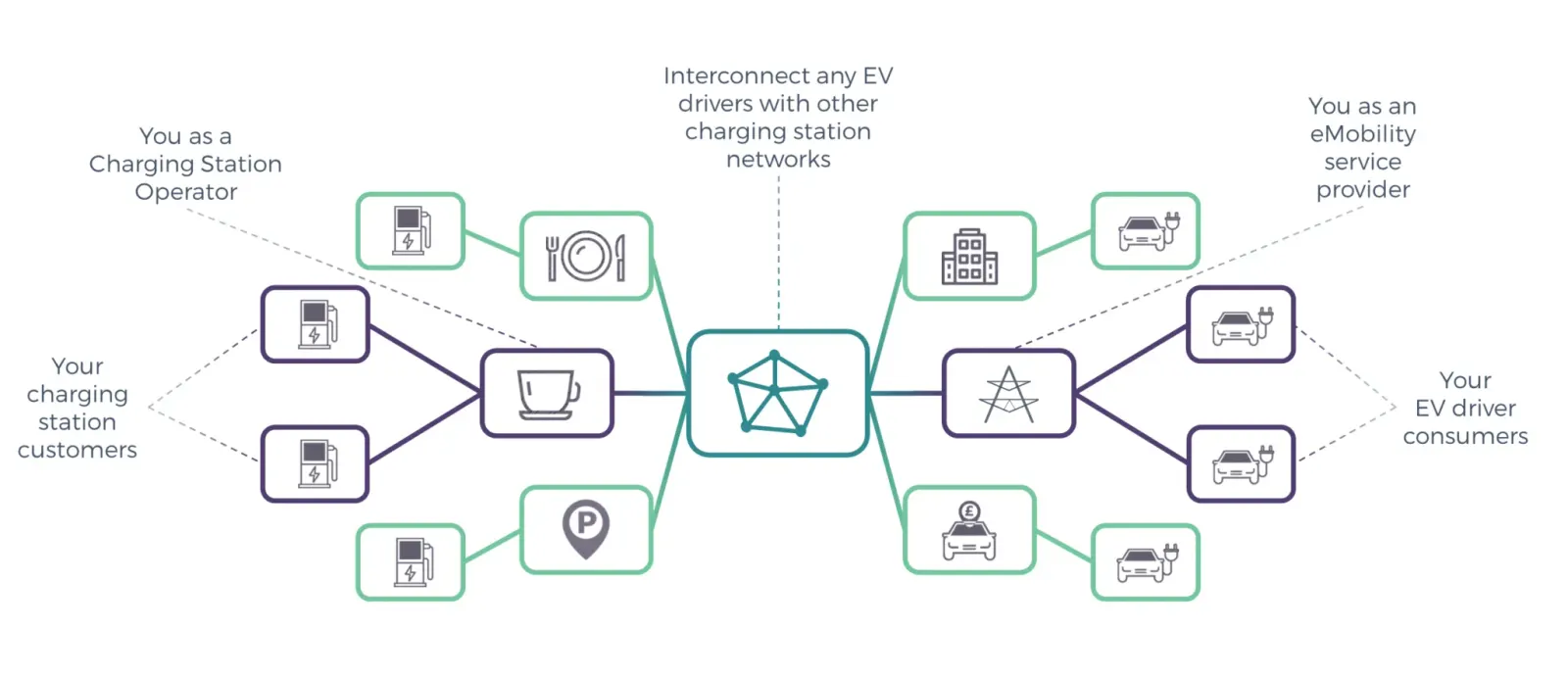
Your charger talks to any back office. Versinetic does not sell a charge station management system - we build the part of the charger that talks to one, so you can connect to whichever platform you or your customer already runs.
That is a deliberate position. Our OCPP library is a client, tested against multiple back offices and at Open Charge Alliance Plugfests, so a charger built on our EV charge controller boards is not tied to a single vendor. If your customer changes platform, the charger does not change.
Where the line sits
What a back office does, and what we do
| A back office does | We do |
|---|---|
| User accounts, authorisation, tariffs | The OCPP client inside the charger |
| Billing and payment settlement | Local control when the connection drops |
| Roaming between networks | Authentication at the charge point |
| Fleet and site reporting | Metering data the back office reads |
| Remote start, stop and diagnostics | The charger side of every one of those commands |
If you need a platform, we will point you at providers we have worked with. If you need a charger that connects reliably to the one you have chosen, that is what we build. See bespoke charger design if the connection is the smaller part of what you need.
Resilience
Working without a constant connection
Our local controller sits between the OCPP client and the back office, relaying messages without requiring a permanent connection. It can inject OCPP messages for local control, which is how load balancing works alongside a building energy management system, and it drops into an existing CSMS with very little integration effort.
This matters more than it sounds. A public charge point on a poor mobile signal must not stop taking sessions because the platform is unreachable. LinkRay works entirely offline for the same reason.
Partners
Integrating with a new platform is configuration, not development
We have integrated with back office providers on customer projects, including Saascharge. Because the connection is OCPP rather than proprietary, integrating with a new platform is a configuration exercise rather than a development one.
The ISO 15118 stack handles vehicle side authentication independently of whichever back office sits behind it.
Saascharge is one of the back office providers we have integrated with on customer projects.
Back office integration FAQs
Your top queries answered
Do you sell a back office?
No, and we are not planning to. Our controllers speak OCPP, so you keep the platform you have.
Which back offices do you work with?
Any that supports OCPP, which is nearly all of them. We have integrated with several on customer projects and can tell you what to expect from the ones we know.
Can you recommend one?
Yes, informally. We are not a reseller and take no commission, so the recommendation depends on what you are building rather than on a partnership.
What happens when the connection to the back office drops?
The charger keeps working. The local controller queues messages and the local authorisation list lets known users charge while offline. The same principle applies at site level with SiteManager.
Can you build a custom integration?
Yes. Bridging MQTT, JSON, Modbus or a proprietary API is bespoke work rather than a product, so tell us what you need to connect to.
More detail on the OCPP library, SiteManager for the site-level equivalent, and build under licence if you want the software in your own product.
Get in touch
Discuss your options with our engineering consultants
Tell us which back office your charger has to talk to and we will tell you what the integration involves.