Load balancing
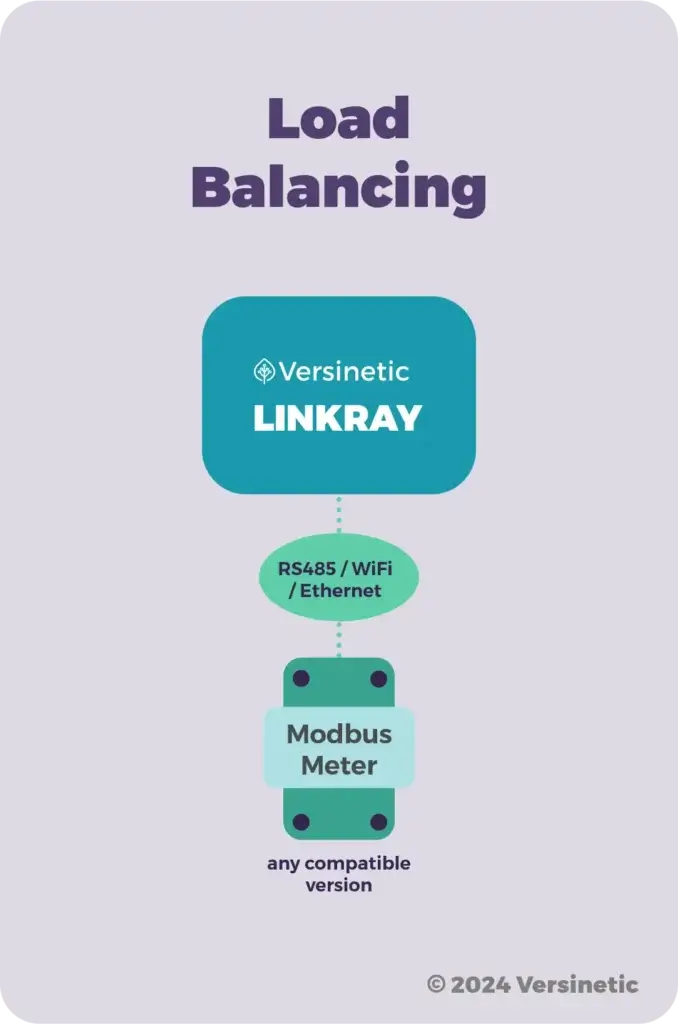
Communicates with most third-party energy meters to dynamically adapt to the site load, or hold charging stations within a set limit so you never blow the incoming supply.
Load balancing · Controller
Subscription-Free Local Load Balancing Controller
A small onsite module that keeps a whole charging site inside its power limit. LinkRay balances up to 100 AC and DC chargers, works with battery storage, and runs standalone or alongside any OCPP-compatible back office - with no recurring subscription.
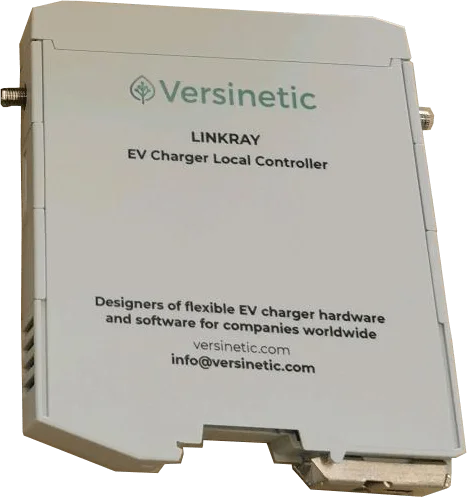
Overview
LinkRay is installed locally, next to your chargers, and makes every load balancing decision itself. It reads your site meter every second and can tell a charger to reduce power within 2 to 4 seconds of a spike in demand.
Nothing in that loop leaves the building other than authorisation requests and other non-balancing OCPP commands: no request to a remote server, no dependency on someone else's cloud, no round trip over the same internet connection that may be the reason a decision is needed in the first place.
It is brand agnostic, working with any OCPP compatible charger, handles both AC and DC on the same site, and reads from almost any Modbus meter, so it fits the chargers and metering you already have rather than requiring you to standardise on one supplier.
Feature overview
Local speed
A cloud based load balancer has to send a reading up to a remote server and wait for an instruction back, over the same connection that can be slow, congested, or down. LinkRay's control loop never leaves the site.
Every second
The site meter is read, and charger power requests are checked, once a second.
2 to 4 seconds
Total response from a spike in demand to chargers being told to reduce.
1 to 2 seconds
Fast changes at the site are seen, and chargers immediately told to offer less.
60 second hold
Power is only offered back up once usage has stayed down for a rolling minute, so chargers are not flickered up and down on every small fluctuation.
The result is a load balancing loop as fast as the site's own wiring, and it stays that fast whether the internet connection is excellent or missing entirely.
Attack surface
Because the balancing decision never has to leave the site, there is no cloud service in that loop to secure, patch, or worry about being unavailable.
Internet outage
If the connection to your charge station management system drops, LinkRay does not stop balancing or stop authorising sessions.
An outage is an inconvenience for remote visibility, not an interruption to charging or, more importantly, to load balancing.
Licensing
LinkRay's load balancing function is licensed to the hardware, with no recurring platform fee.
Load management that just works
LinkRay brings the load balancing, monitoring and access control a multi-charger site needs into one onsite module - with the fast local response that cloud-only systems cannot match.
Load balancing
Communicates with most third-party energy meters to dynamically adapt to the site load, or hold charging stations within a set limit so you never blow the incoming supply.
Remote monitoring
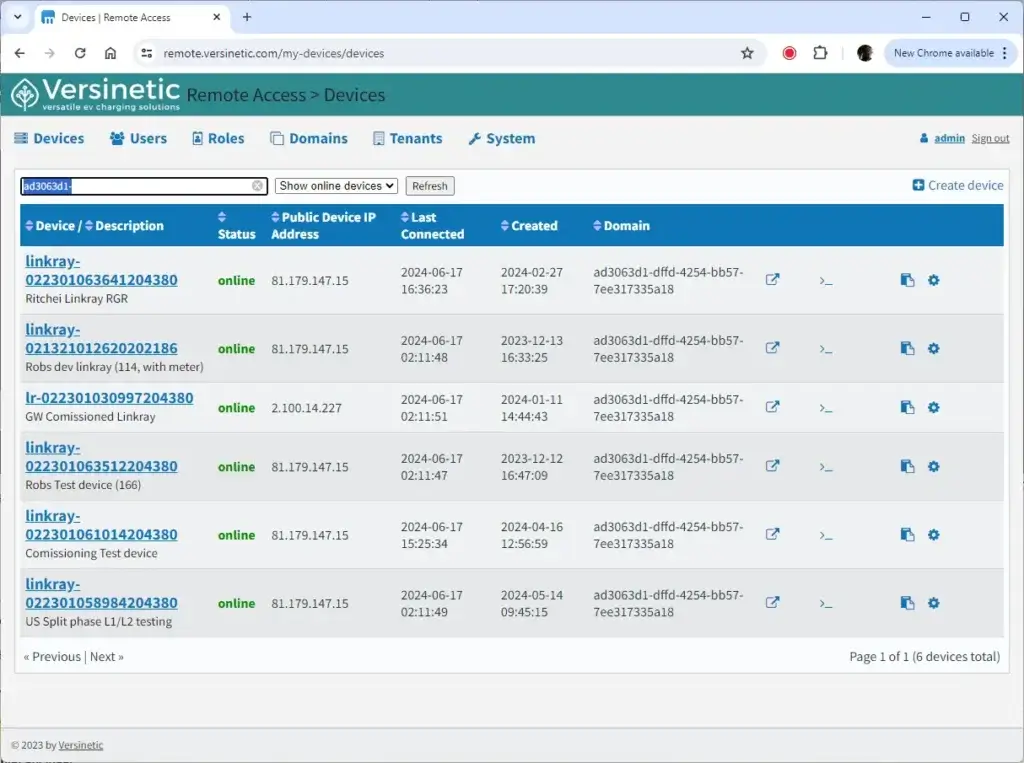
The Versinetic remote services cloud - included with every LinkRay - lets you log into any deployed device, watch live sessions and configure it as if you were on-site. All devices sit in one account.
Onsite reliability
Balancing locally rather than through the cloud gives the fastest response to changing building load, and lets LinkRay poll charge data far more often without costly cellular data.
Grouping & prioritising
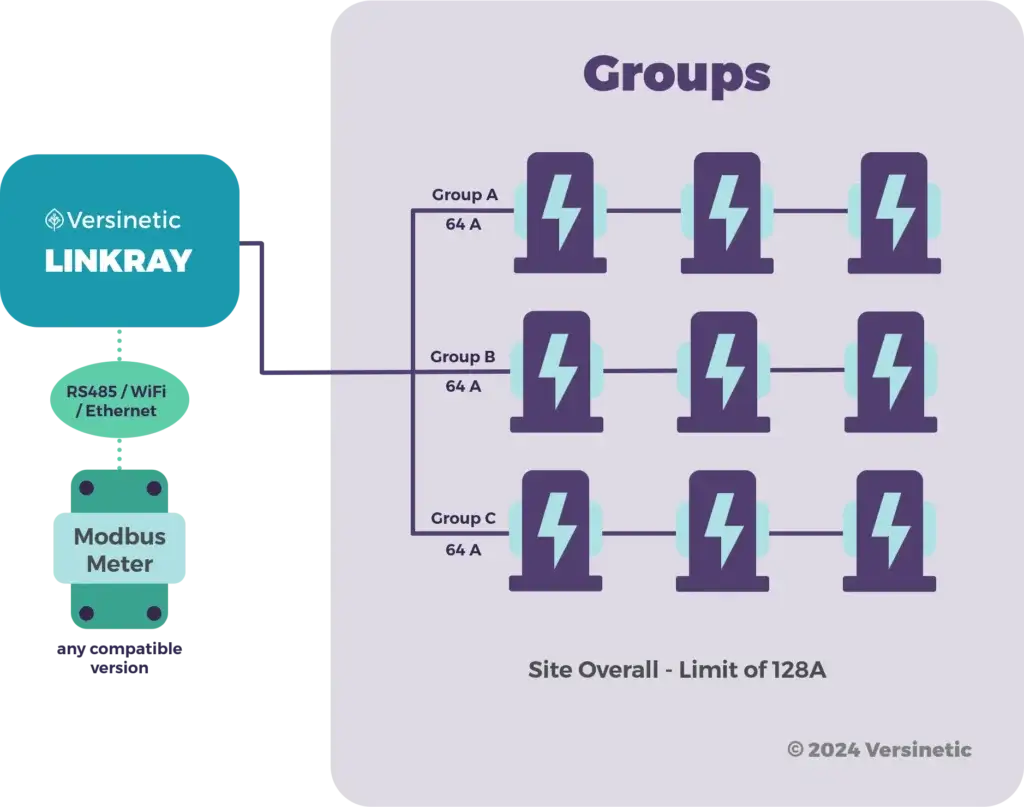
Manage cable runs and group limits under an overall site cap, and exclude priority chargers from balancing so they can draw their full capability.
API access for BMS
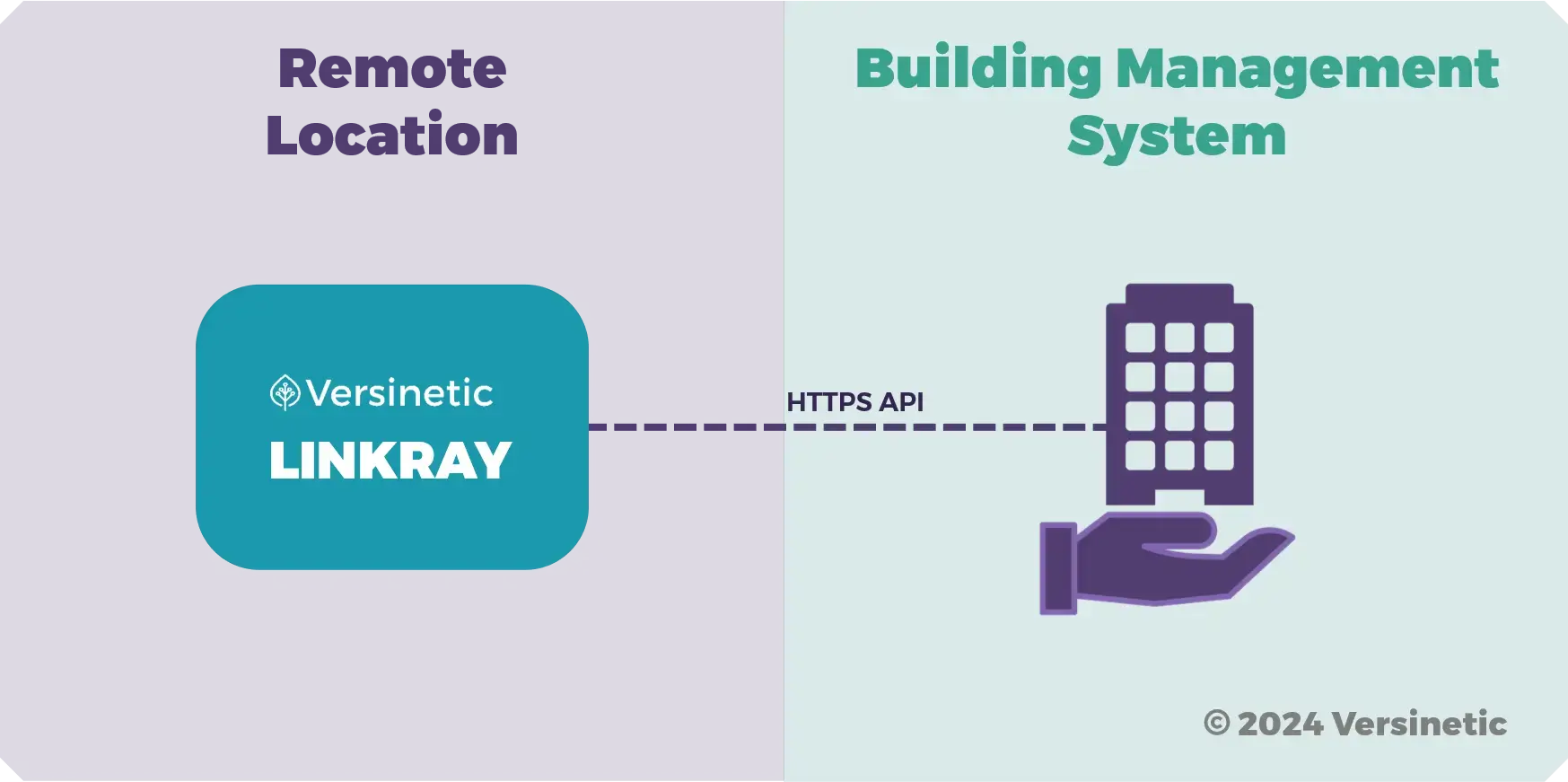
Load balancing and the web UI are cleanly separated. A secure HTTPS link and unique token give a Building Management System read or read/write control.
Queue management
FIFO queuing with automatic round-robin after a timeout ensures fair access to charging on low-power sites with a high number of chargers.
The web platform
Every LinkRay ships with the web platform behind those capabilities. Log into any deployed device from one account, watch live sessions, and see how balancing, billing, grouping and BMS access fit together on site.
Simplify your installs
LinkRay is built to be dependable long after installation - running without a cloud connection when needed, protecting itself with hardware-backed security, and keeping firmware current on its own.
Without a cloud CSMS, LinkRay handles authentication from a local whitelist managed through the web interface. Transactions are logged and downloadable by week, month or custom range, and non-charging schedules can be set daily or weekly. Every feature stays available when you later connect online.
Built on Versinetic’s EV charging heritage with secure boot, a Trusted Platform Module (TPM) and certificate access. Multi-level web login with separate remote-access passwords supports two-factor authentication via Google Authenticator, and private-APN customers can route connectivity checks through their own servers.
Firmware updates arrive over the air from Versinetic servers, or point devices at your own. Schedule updates for idle windows and keep tight control of the rollout. Updates for LinkRay and connected chargers resume automatically if a connection drops mid-flash rather than failing.
Licences are perpetual for a set number of devices, and LinkRays can be upgraded in the field to support more chargers later. Budget for what you need today with the confidence to extend without buying a subscription.
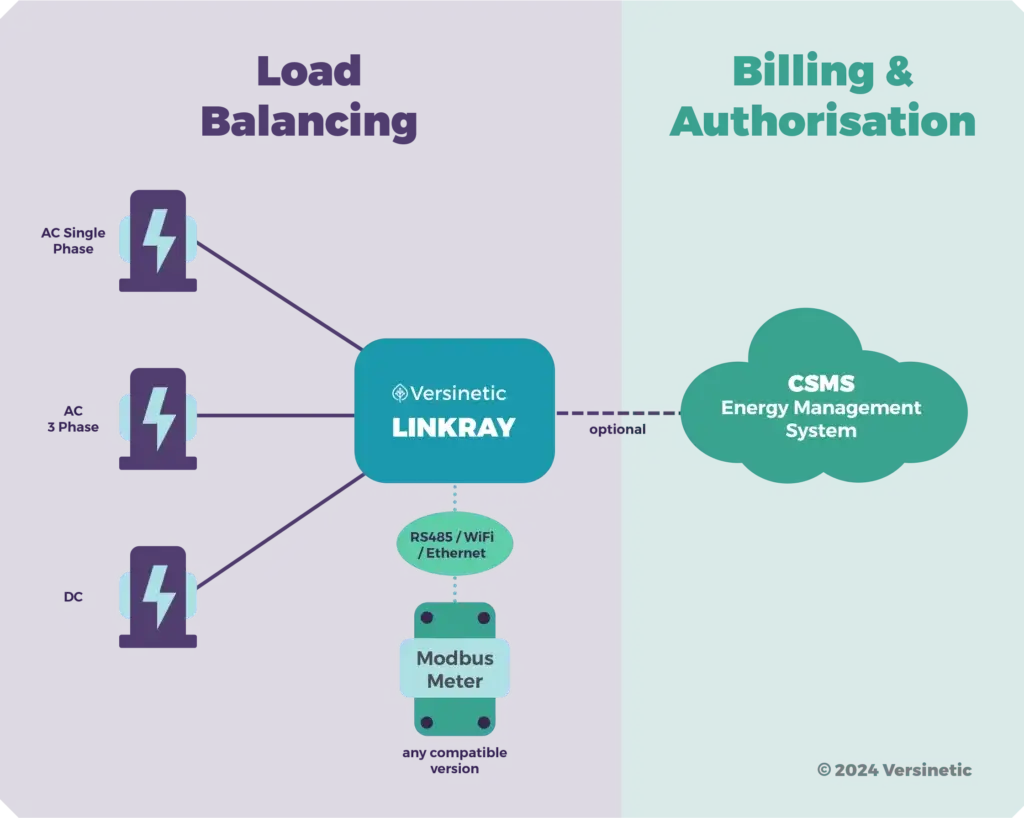
How it fits together
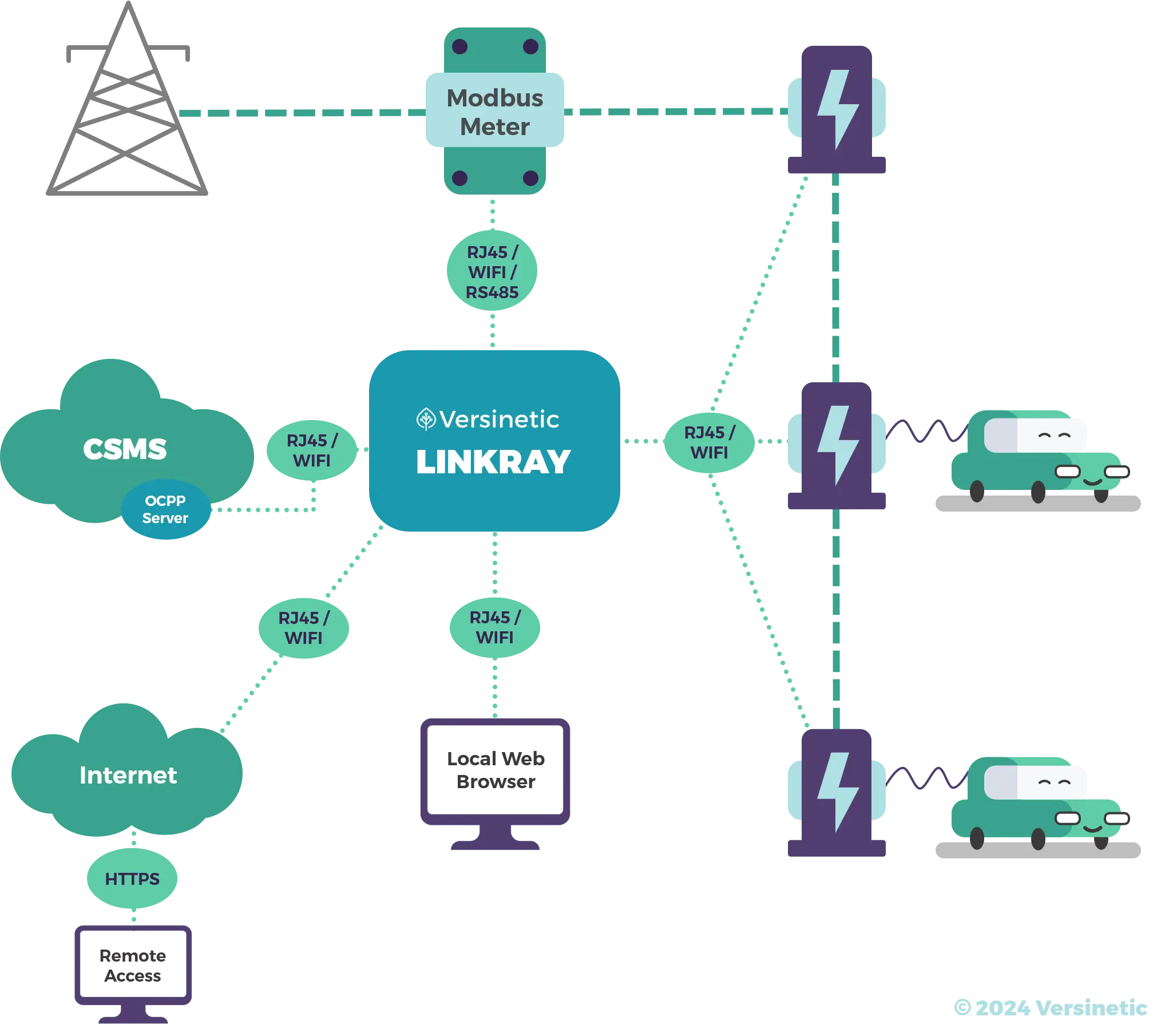
One LinkRay module sits between your supply, your meters and your chargers - balancing locally while staying connected to the cloud services and CSMS you choose.
Typical application
Watch how a typical LinkRay installation keeps a multi-charger site inside its supply limit as building load and charging demand change.
What it reads, and how far it scales
Most load balancers sold by charger manufacturers only balance their own brand. LinkRay treats every OCPP compatible charger the same way, regardless of who made it.
Chargers
Meters
Dynamic balancing reads real site usage from an external Modbus meter over RS485 or Modbus TCP, rather than assuming every charger is drawing full power.
Scale
A G100 limit determines what a site may draw, and reinforcement often costs more than every charger on the scheme put together.
Storage and generation
LinkRay can act as a battery storage controller directly, so a battery can extend site power beyond the grid connection limit, run the site from stored energy at chosen times (Economic mode), or charge from off peak grid power.
A reserve percentage keeps a safety margin of charge in hand rather than draining the battery completely.
Solar generation and battery storage are read into the same meter based calculation as the grid connection, so all three are balanced as one system rather than three separate ones.
In the field
“LinkRay is great. It is easy to use, expandable and the customer support has been fantastic. The user interface is good to navigate and easily accessible externally.”
Richard Gluskie
Engineering Officer, Infrastructure Services, Plus ES
Plus ES installed chargers at an Ausgrid depot inside an 800A site limit with no grid reinforcement. Read the case study.
“LinkRay was just what we were looking for - on-site charge point management with an array of features that ensure efficient, balanced charging across multiple EV points. It significantly eases the management of EV charging infrastructure, optimising power distribution and preventing site overloads. Not only is it feature-rich, but the support team ensures any questions are swiftly addressed.”
Ben Stratton
Director, Orbis EV
“Versinetic’s LinkRay has introduced a game-changing remote access feature for our EV charger installations. It has allowed us to configure and monitor systems from afar, significantly reducing the need for on-site visits. The team’s exceptional support and rapid response to our queries have been invaluable - their commitment to product improvement is evident in every interaction.”
Jaap Berg
Business Development Manager, EV - Ratio
“So cool - LinkRay is such a versatile product. It’s the missing link really for so many multi-dwelling unit charging use cases that doesn’t exist anywhere else.”
Anthony Magliari
Chicago, Illinois, USA
See it in action
Subscription-free local load balancing, remote monitoring and site-wide control - see what LinkRay does for an EV charging site in a couple of minutes.
Compatibility
LinkRay has been tested against an extensive range of chargers, charge management systems and meters, so it fits into the site you are building rather than dictating it. We've helped installers across four continents load balance chargers quickly and easily, regardless of brand or type.
Peace of mind through outages
LinkRay balances locally with a cloud CSMS attached, and if the internet drops it buffers OCPP messages onsite. When the connection returns, the CSMS correctly identifies any charge sessions completed during the outage - no lost transactions.
CSMS
Tested with many cloud charge management systems, so you keep the freedom to choose whichever backend provider suits you.
Chargers
Proven with AC and DC units, single- and multi-connector (up to 16 per charger), single- and three-phase, and high-power DC above 200kW.
Meters
Connects to many external meters over RS485 or WiFi/network, with known configuration sets available to download and new meters easily added.























See the full validated ecosystem on the LinkRay partners page.
Certified for the field
Engineered, tested and certified for international deployment, LinkRay carries UL, UKCA, CE and RCM markings - hardware you can specify with confidence in the UK, Europe, North America and Australia.



Charging modules
OCPP · Communications Controller
Smart charge point communications controller for AC and DC chargers, speaking OCPP to any back office.
Load Balancing · Site Software
Manage and monitor charging sites at scale, from onsite operation through to fleet-wide oversight.
Ecosystem · Tested Compatibility
See the chargers, CSMS platforms and meters LinkRay has been validated against.
FAQs
The site meter is read every second and charger power requests are checked every second. Total response time is 2 to 4 seconds from a spike in demand to chargers being told to reduce, all decided on site, with no cloud round trip.
Because load balancing runs entirely locally, an internal charging network does not need an outbound gateway at all. LinkRay also supports HTTPS with or without your own signed certificate, enforces a password change from defaults during setup, and offers two factor authentication for any remote access account.
Load balancing and offline authorisation continue locally. Messages destined for the CSMS are buffered for up to 24 hours and upload automatically once the connection returns, with transaction IDs reconciled to the CSMS automatically. Firmware updates resume rather than fail.
Not for load balancing. That is licensed once, with no recurring platform fee. Remote access is offered as a separate, optional service with the first year included. If it is not renewed, load balancing is unaffected.
Yes, if they speak OCPP, which almost all do. Different brands on one site, and AC and DC together, are both normal. LinkRay does not require chargers from a single manufacturer the way many vendor load balancers do.
Any Modbus meter over RS485 or Modbus TCP. Configuration profiles already exist for a wide range of common meters (Eastron, Carlo Gavazzi, Socomec, Schneider and others), and any further meter can be added with a configuration file.
Up to 100 on a single monitoring point. Beyond that, or where a site has several transformers or switchboards, SiteManager coordinates multiple LinkRay units, scaling to as many as 6,400 chargers across a portfolio.
Yes. LinkRay can control battery storage directly, and solar generation is read through the site meter alongside grid and battery, so all three are treated as one system when allocating power to chargers.
Get in touch
Give us the connection limit and the charger count and we will tell you what the site will carry. See also load balancing and the partner programme.