TL;DR: The Landscape of Kerbside EV Charging in the UK
- Urban residents without driveways still face significant barriers to at-home EV charging.
- £24.8 million recently invested by the UK government to boost kerbside charging projects via the LEVI Fund.
- Existing kerbside charging options for households without off-street parking include: cables across pavements, gully-sunk systems, pillar chargers, lamppost integration, pole-mounted solutions, buried and pop-up chargers, repurposed street furniture, rapid chargers, and inductive charging.
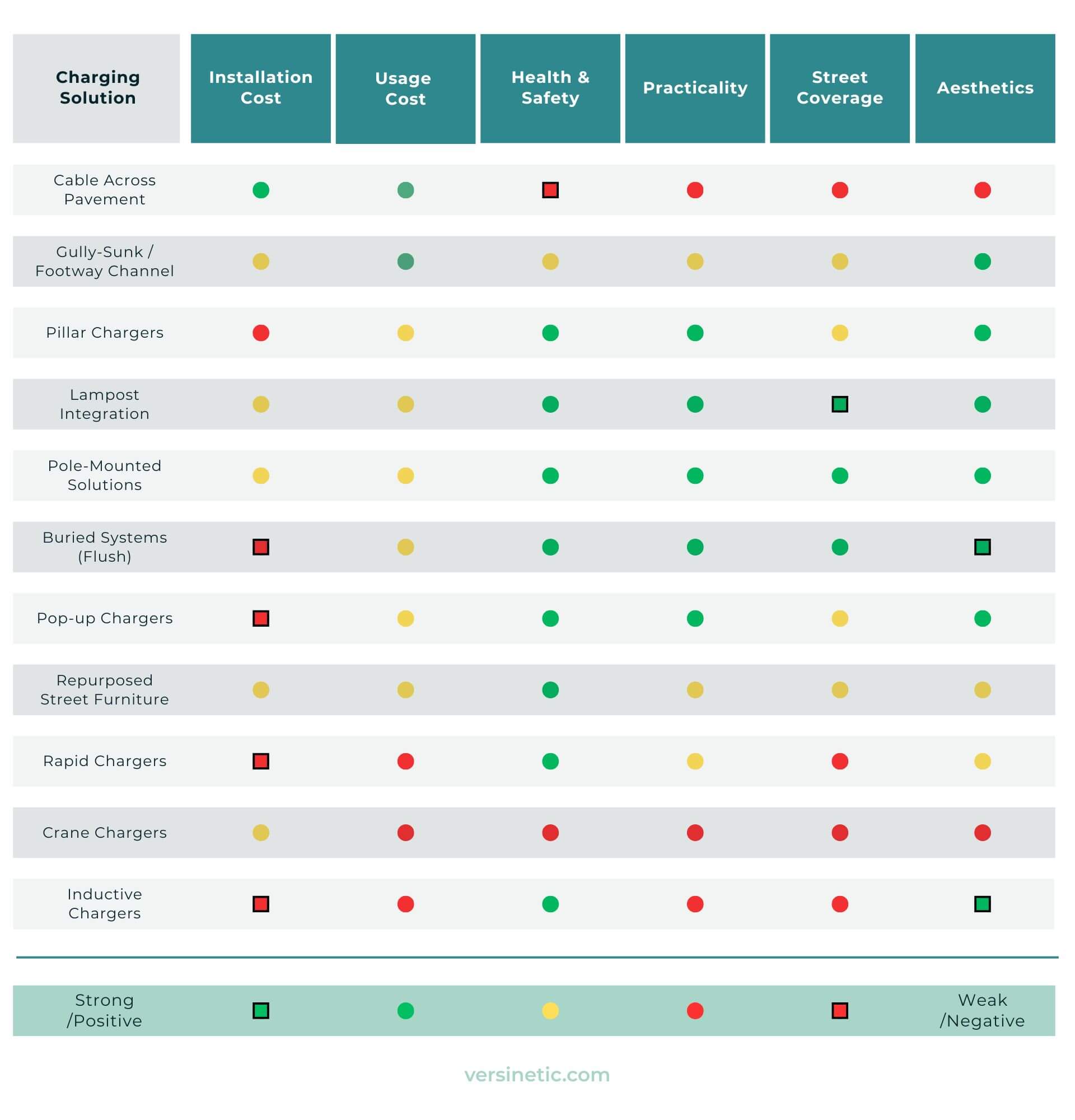
- Each method holds differing installation costs, usage costs, health and safety considerations, practicality points, potential street coverage, and aesthetics.
- No single solution suits every situation – matching the right technology to each location is essential for bridging the kerbside charging gap.
Table of Contents
When I addressed the AEVA national conference in Hobart, Australia, last year I highlighted one of the most persistent obstacles to EV adoption…
…how do you charge if you don’t have a driveway?
Indeed, in our 2023 industry research, 70% of EV drivers identified on-street charging as the leading infrastructure challenge.
The UK has more than 84,000 charge points installed – according to ZapMap’s July 2025 data – with thousands being added every month. Yet the majority of these are still low-powered, domestic devices.
For the millions of people living in terraced houses, flats, or homes without off-street parking, that growth means little unless kerbside charging becomes a viable option.
It’s encouraging to see the UK government has committed £24.8 million through the Local EV Infrastructure (LEVI) Fund to support kerbside charging schemes. This is a step in the right direction.
But investment alone will not solve the challenge: we need to assess which technologies are practical, safe, and scalable for our streets.
What Are the Key Kerbside Charging Challenges?
The challenge of on-street domestic charging has already driven a wide variety of solutions, each with distinct advantages and challenges.
These sit across six key criteria:
- Installation cost
- Usage cost
- Health and safety
- Practicality
- Street coverage potential
- Aesthetics
Let’s examine all the options currently available to UK residents without a driveway, and consider them with these six criteria in mind.
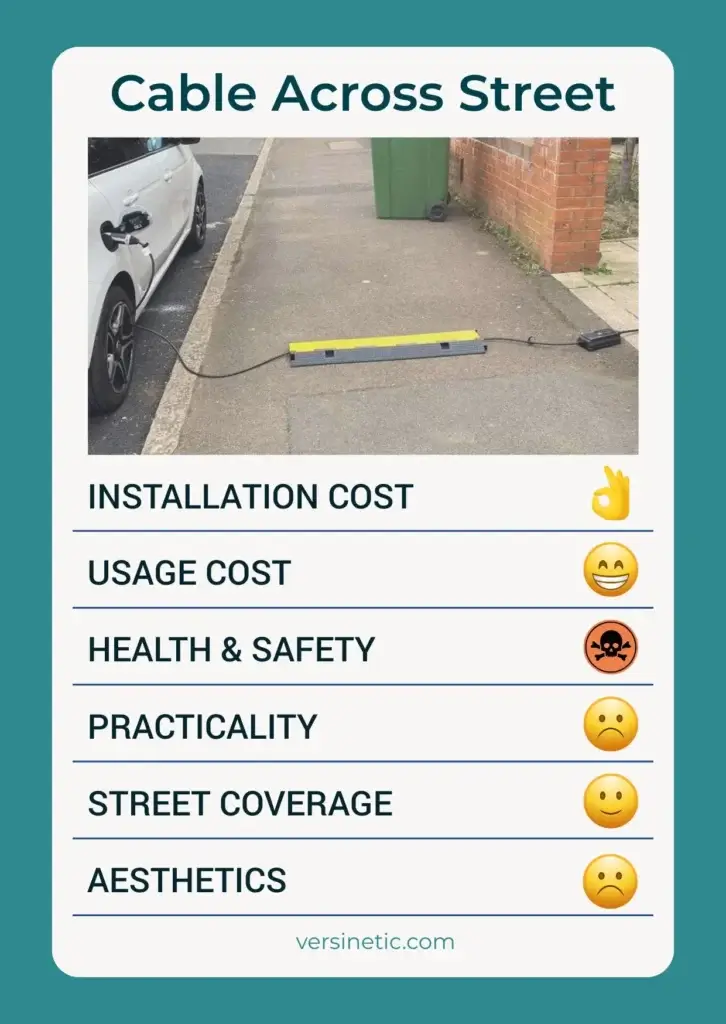
Cable Across Street Solutions
Perhaps the most basic approach involves running a charging cable directly across the pavement from home to vehicle.- This scores well on installation and usage costs (essentially just requiring a standard home charger)
- However, the health and safety implications are severe – Cables across pavements present obvious trip hazards for pedestrians, particularly those with mobility issues or visual impairments.
- In terms of practicality, not everyone can park adjacent to their property.
- And trailing cables across the street is unsightly.
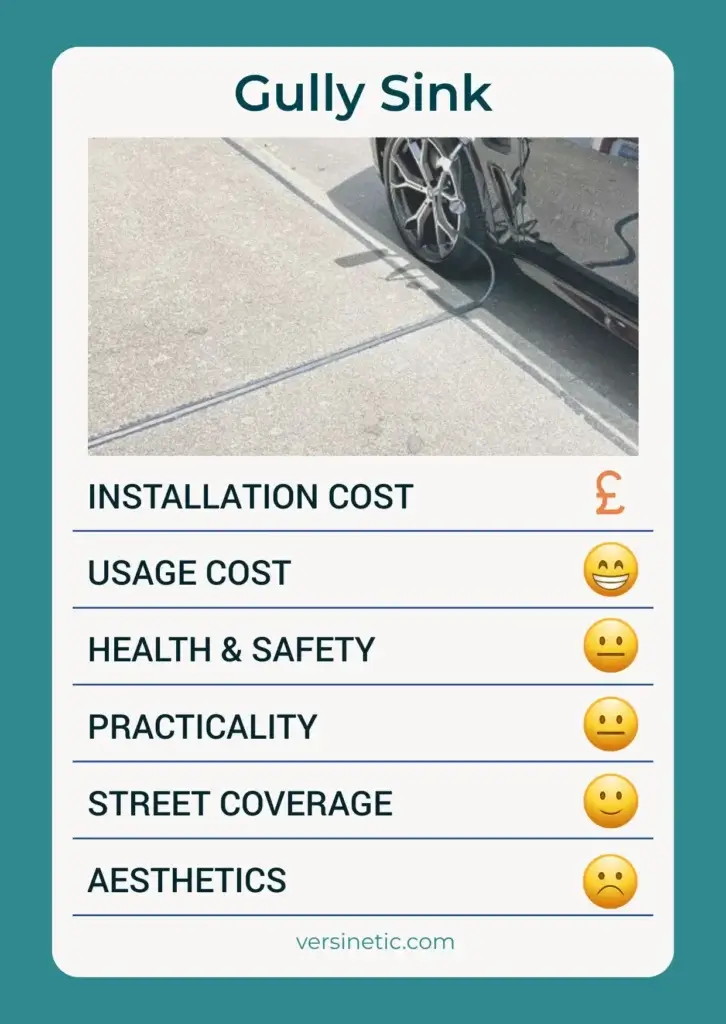
Gully-Sunk Systems / Footway Channel
A more sophisticated approach involves installing charging points sunk into roadside gullies or channels, sometimes referred to as a footway channel.
- These systems address some safety concerns by keeping cables below ground level when not in use.
- Installation costs are moderate compared to full infrastructure solutions, though higher than simple cable arrangements. (Some local governments charge an annual license renewal fee on top of the installation fee).
- The aesthetic impact is relatively minimal, but practicality depends on suitable road layouts and drainage systems.
- And again, this installation relies heavily on being able to park directly outside your home overnight.
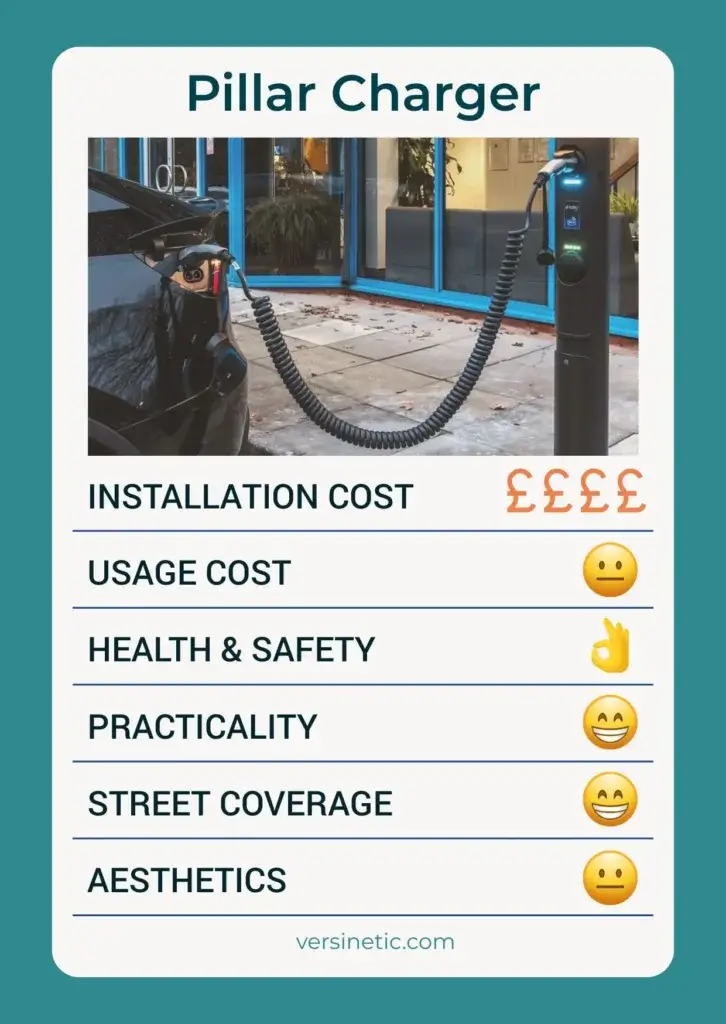
Pillar Chargers
Dedicated charging pillars represent a more conventional approach, similar to traditional petrol station architecture but scaled for residential streets.- These standalone units offer good practicality and safety, with professional installation and maintenance protocols.
- However, installation costs are significant, requiring dedicated electrical connections and civil works.
- Street coverage is limited by available space and grid capacity, though with the modern design, they are generally aesthetically pleasing.
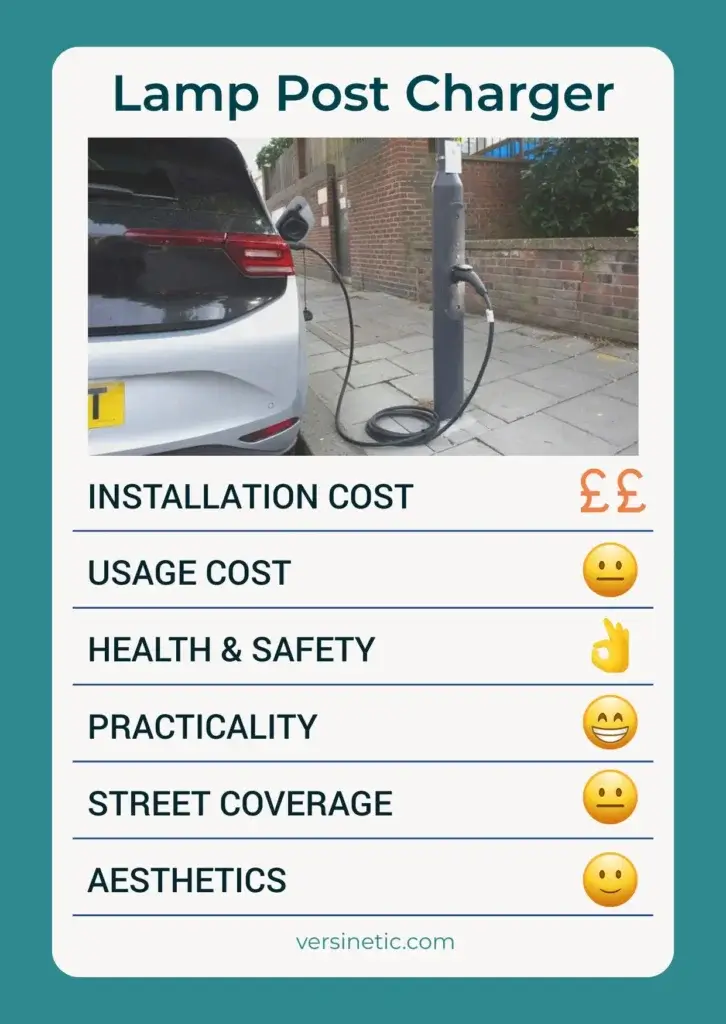
Lamppost Integration
Converting existing lampposts offers a great solution, maximising on existing infrastructure.A more sophisticated approach involves installing charging points sunk into roadside gullies or channels, sometimes referred to as a footway channel.
- Lamppost charging systems provide excellent street coverage potential since most residential streets already have lighting columns.
- Installation costs are moderate compared to new infrastructure, utilising existing electrical connections where possible.
- The aesthetic impact is minimal, maintaining familiar streetscapes whilst adding functionality.
- Safety and practicality are generally good, though charging speeds may be limited by existing electrical capacity.
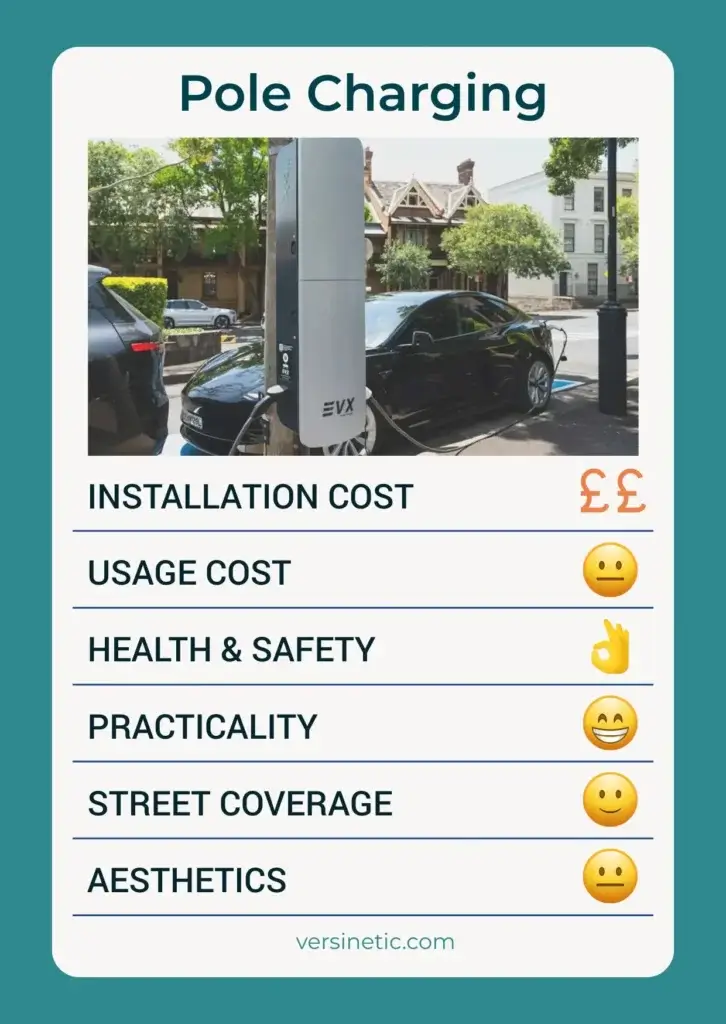
Pole-Mounted Solutions
Purpose-built charging poles offer a middle ground between pillars and lamppost conversion.- These systems can be designed specifically for charging requirements without the constraints of existing infrastructure.
- Installation costs are moderate to high, but street coverage potential is excellent.
- Modern pole designs can be aesthetically pleasing, and safety standards are high.
- Practicality is good, though careful planning is required for optimal positioning.
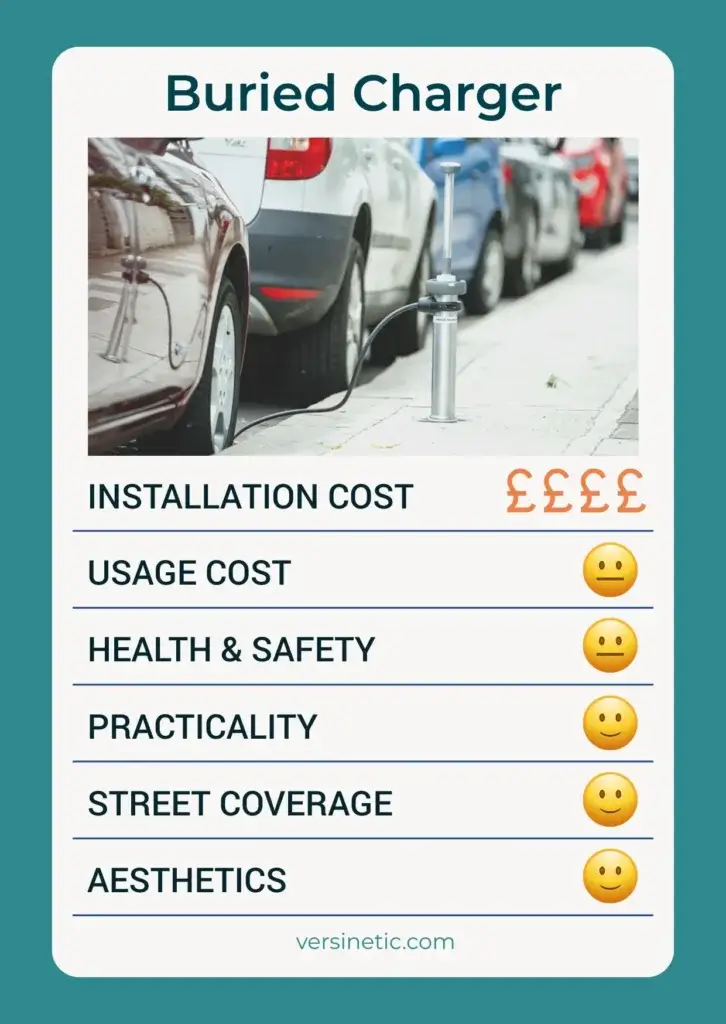
Buried Charging Systems
Perhaps one of the most innovative approaches involves completely buried charging points that rise from the ground when needed.- Companies like Trojan Energy have pioneered these “flat and flush” solutions that are virtually invisible when not in use.
- Installation costs are substantial due to the complexity of the mechanism and civil engineering requirements.
- However, they offer excellent aesthetics by maintaining uncluttered streetscapes, and safety is good with no permanent protrusions.
- They’re pretty practical once installed, and street coverage potential is good since they don’t compete with other street furniture for space.
Pop-Up Chargers
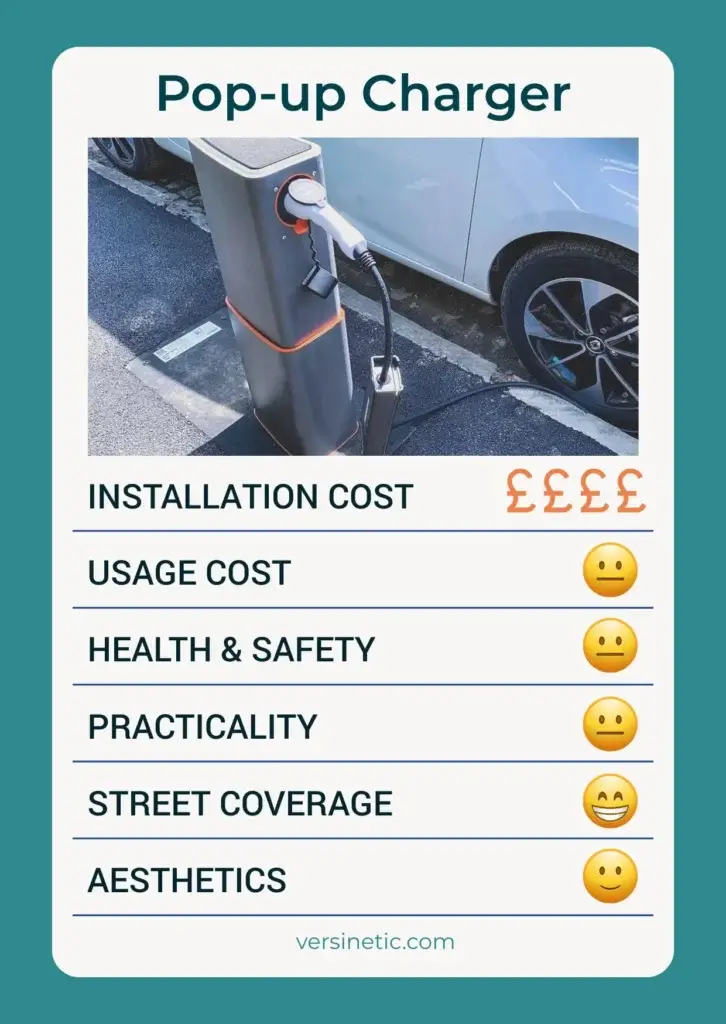
Similar to buried systems but with more dramatic activation, pop-up chargers emerge from pavements or roadsides when required.- These represent some of the most novel solutions available, often featuring substantial mechanical systems. However, their complexity currently makes them less scalable.
- Installation costs are very high due to the complex engineering involved.
- Safety is generally good with proper implementation, though moving parts require regular maintenance.
- Aesthetically, they’re not an eye-sore and practicality is high for users.
- Street coverage potential is good, but could ultimately be limited by the high installation costs.
Repurposed Street Furniture
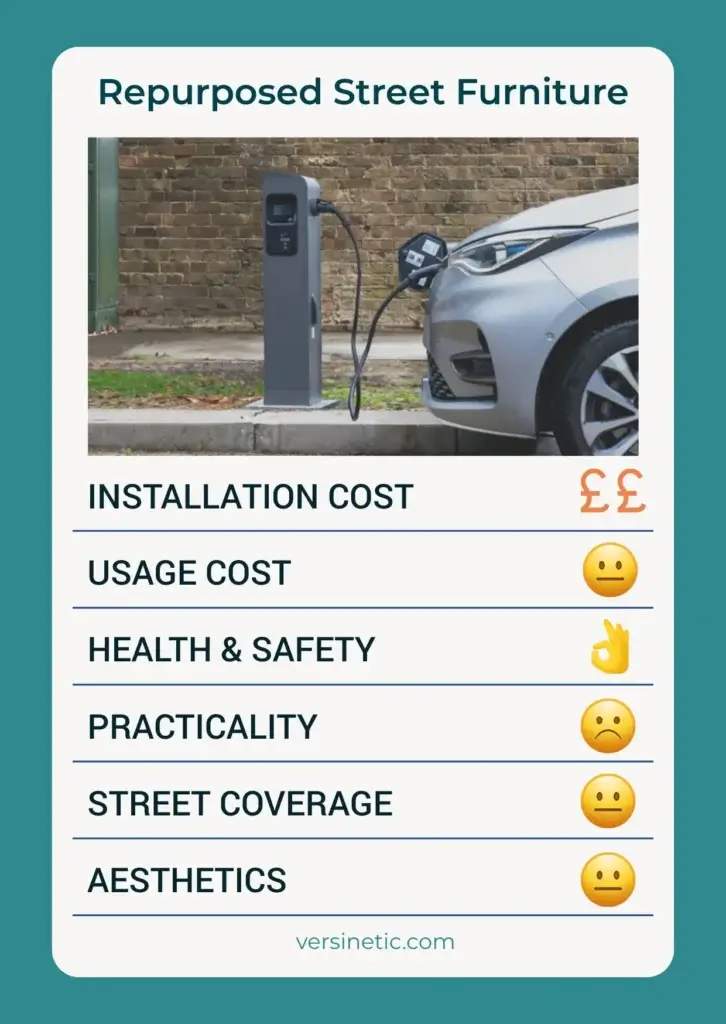
Creative approaches converting existing street infrastructure – (in addition to lampposts) including telephone boxes, post boxes, or other street furniture – into charging points.- BT’s Street Hub programme transforms old phone boxes into EV charging stations with additional services like Wi-Fi and phone charging.
- Installation costs vary depending on the existing infrastructure, but are typically moderate.
- Aesthetics depend on design quality, and safety is generally good.
- Practicality varies by location, and street coverage potential depends on existing, suitable infrastructure available to use.
Rapid Charger Integration
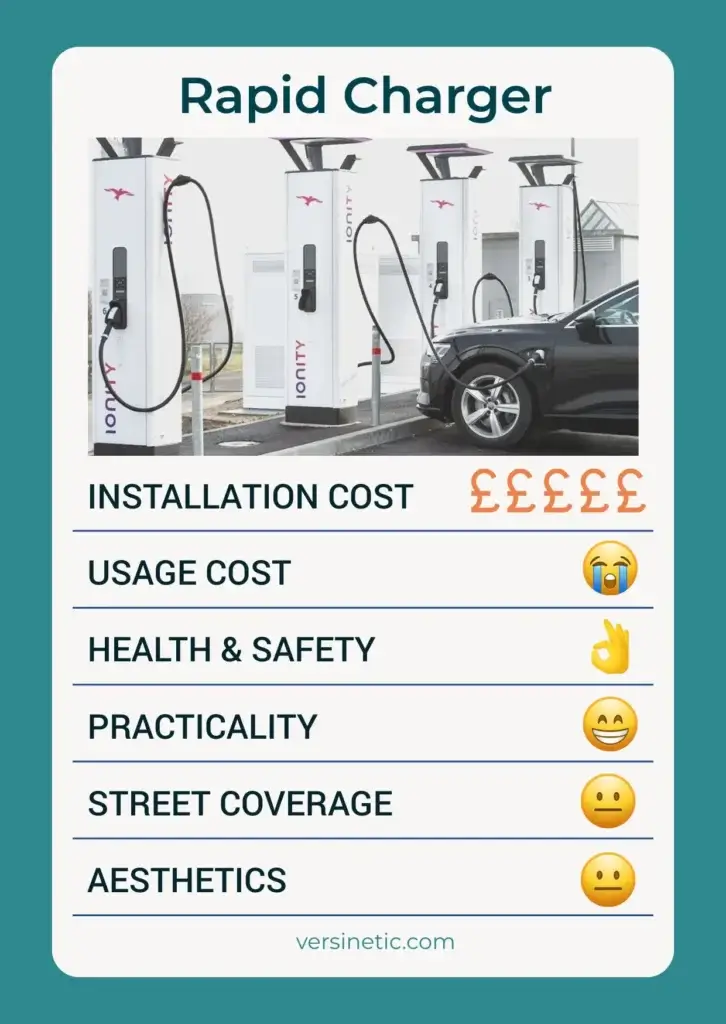
For locations where there is land available, integrating rapid charging capabilities into residential streets offers the fastest charging speeds.- However, installation costs are very high due to grid connection requirements and substantial electrical infrastructure.
- These systems are typically more suitable for key locations rather than comprehensive street coverage.
- Aesthetically, they tend to be large and prominent, though modern designs are increasingly sophisticated.
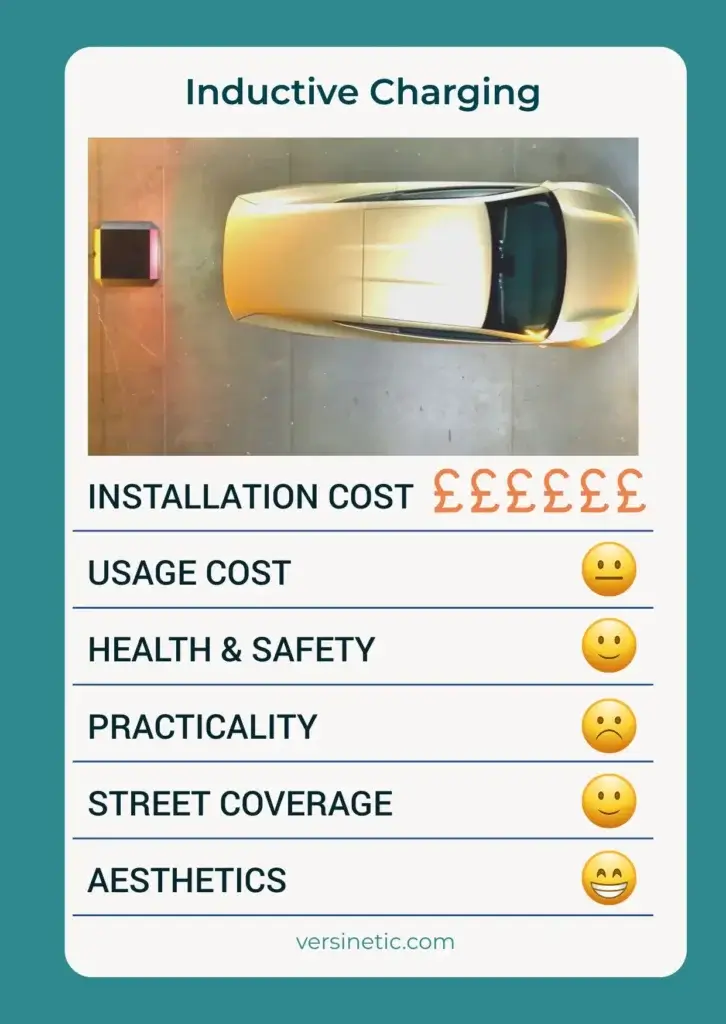
Inductive Charging
The most futuristic approach involves wireless power transfer through inductive coupling. Vehicles can park over charging pads embedded in the road surface, eliminating cables entirely.- Whilst elegant in concept, current technology faces significant challenges in efficiency and cost.
- Installation requires substantial road reconstruction, making costs extremely high.
- Safety is good with no exposed electrical connections, and aesthetics are excellent with no visible charging equipment.
- However, practicality is limited by current technology constraints and vehicle compatibility.
⚡ Versinetic’s Kerbside EV Charging Summary
We’ve created a heatmap of the different types of EV Kerbside charging, along with how they score across the 6 key challenge criteria.
What Are the Key Challenges Facing the Industry?
The diversity of existing kerbside charging solutions reflects the complexity of the challenges in this fast-moving sector.
According to industry analysis by SMS Energy and broader government research, installers must navigate varying local conditions, from population density and existing street furniture to political landscapes and environmental constraints.
High installation costs add another barrier for many, while BEAMA recognises, telecommunications standards, environmental resilience, and integration with renewable energy sources as factors adding further complexity.
Fragmented technical standards remain a key issue, affecting both public and domestic charging solutions, whilst political priorities vary significantly between local authorities.
Reliability is also a concern. Our 2024 survey and whitepaper, found 46% of UK EV drivers had encountered non-functional public chargers, highlighting the need for a reliable kerbside infrastructure.
And once all this has been taken into consideration, installers also have to face the challenge of urban networks not being designed for high-density charging without a load management solution in place.
In short, the industry faces an entanglement of financial, technical, political and operational challenges – all of which need to be addressed in order to accelerate EV adoption.
Beyond One-Size-Fits-All: Why Mixed Solutions Are Key to Kerbside Success
As I said when presenting at the AEVA national conference last year, no single kerbside charging solution will work everywhere.
Streets differ, communities differ, and so must the technology we deploy.
What matters is matching the right approach to the right location, balancing cost, safety, practicality, and visual impact. That’s how we make charging accessible to the millions of households without driveways.
The UK’s transition to electric mobility depends on it. Success will come not from choosing one “winner”, but from a toolkit of options that can be applied where they fit best. At Versinetic, we work with developers to help local authorities and businesses make the best choices and design charging infrastructure that is both future-proof and community-friendly.
Kerbside charging is not a side issue — it is central to widespread EV adoption. Get this right, and we unlock electric mobility for everyone.
Are Your Products Kerbside Ready?
Kerbside EV Charging FAQs
Kerbside domestic charging refers to electric vehicle charging solutions designed for residents without off-street parking, such as those living in terraced houses or flats. It is crucial because millions of UK households cannot install home chargers on private driveways.
Current solutions include cables across pavements, gully-sunk (footway channel) systems, pillar chargers, lamppost-integrated chargers, pole-mounted solutions, fully buried and pop-up chargers, repurposed street furniture, rapid charging stations, and inductive charging pads.
The UK government recently announced a £24.8 million investment for kerbside charging projects through the Local EV Infrastructure (LEVI) Fund, showing significant support for expanding on-street charging.
While running a cable from the house to the car is cost-effective and straightforward, it poses serious health and safety risks due to trip hazards and is generally considered impractical and unsightly for public pavements.
No single solution fits every situation. The best approach depends on local conditions, balancing factors like cost, safety, practicality, and aesthetics. A mix of technologies is likely needed to serve the varied UK residential landscape.
Challenges include local grid constraints, the need for compatible street layouts, installation costs, disparate technical standards, environmental resilience, and meeting the diverse needs of different communities.

Dunstan is the founder of EV charger design consultancy, Versinetic. He is a chartered electronics engineer who has been providing design, production support and consultancy to businesses around the world for over 30 years. Dunstan graduated from Cambridge University with a degree in electronics engineering in 1992. After working in the industry for several years, he co-founded multi-award-winning electronics engineering consultancy ByteSnap Design in 2008. He then went on to launch international EV charging design consultancy Versinetic during the 2020 global lockdown. An experienced conference speaker domestically and internationally, Dunstan covers several areas of EV charger design and electronics product development, including load balancing, V2G, IoT, integrated software design and complex project management.
In his spare time, Dunstan enjoys hiking and astronomy.